
What Is Light Gauge Steel Frame?
Light gauge steel framing refers to a structure consisting of cold-formed thin sheet of steel columns and beams that act like a skeleton to provide strength and stability for buildings. Steel frames can be found in all kinds of buildings, from homes to tall skyscrapers, and from small modular constructions to large custom buildings.
The thin steel sheet is shaped into “C” or “Z” shape profiles which then serve as structural components of the skeleton of roofs, walls, floors, etc.
Light gauge steel framing is just like the wood framing in traditional buildings.
Key Features Of Light Gauge Steel Frame
Thin and Lightweight:
Unlike the structural steel, the light gauge steel used is thinner and lighter, making it easier to handle and transport.
Corrosion Resistant:
The light gauge steel frame is often coated with zinc or other protective materials to prevent rust.
Precision and Consistency:
The light gauge steel frame profiles are prefabricated, ensuring accuracy in dimensions and consistency in quality.
Benefits of Light Gauge Steel Framing
Durability:
Steel is highly resistant to fire, pests, and weather conditions.
Strength: It provides excellent structural integrity, making it suitable for tall or large buildings.
Precision and Consistency
Prefabricated steel components ensure high accuracy during construction. (The “C” and “Z” shape profiles are made by steel framing machine, more specifically CZ purlin roll forming machines. These machines can ensure the precision and consistency. More details about CZ purlin roll forming equipment will be explained below.)
Sustainability: Steel is often recyclable, making it an eco-friendly building material.
Light Gauge Steel Frame Applications:
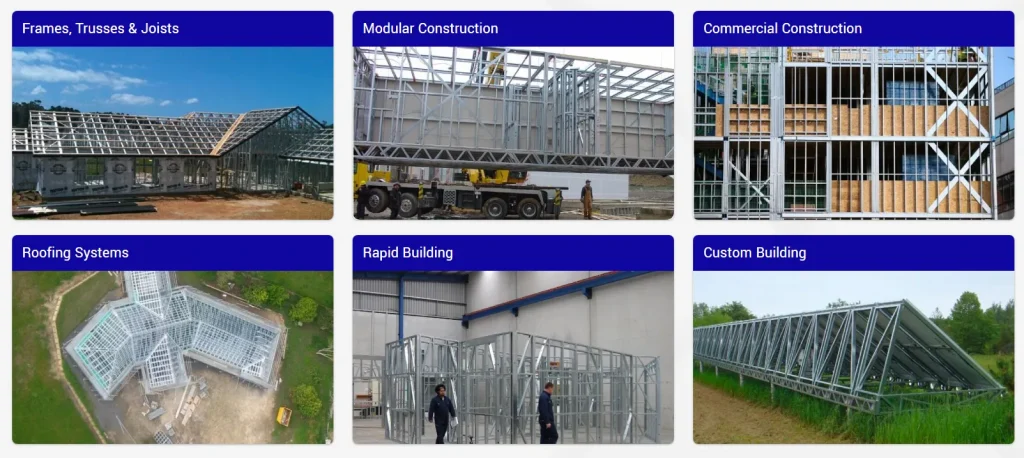
Light gauge steel frame is commonly used in residential homes, commercial buildings, and light industrial structures, especially suitable for buildings that require quick construction and cost-effective framing. The images (image source: HOWICK) below will give you a good understanding of its application in construction.
How is Light Gauge Steel Framing Made?
Light Gauge Steel Framing (LGSF) is made through a precise and efficient manufacturing process that involves several key steps:
- Steel Coils: The process starts with high-quality steel coils, usually galvanized to prevent corrosion. These coils are thin but strong, making them suitable for construction while being lightweight.
- Roll Forming: The steel coils are fed into roll forming machines. These machines gradually shape the steel into specific profiles by passing it through a series of rollers. The roll forming process ensures the framing sections maintain uniformity and precision.
- Punching and Cutting: As the steel is shaped, automated punching machines make holes for services like wiring, plumbing, or connections. Afterward, the formed sections are cut to the required lengths using high-precision cutting tools.
- Assembly and Labeling: The individual sections of light gauge steel are often labeled or marked for easy assembly at the construction site. In some cases, the sections are pre-assembled into panels, ready to be installed on-site.
- Quality Control: Throughout the process, quality control measures ensure that the framing sections meet strict industry standards for strength, precision, and safety.
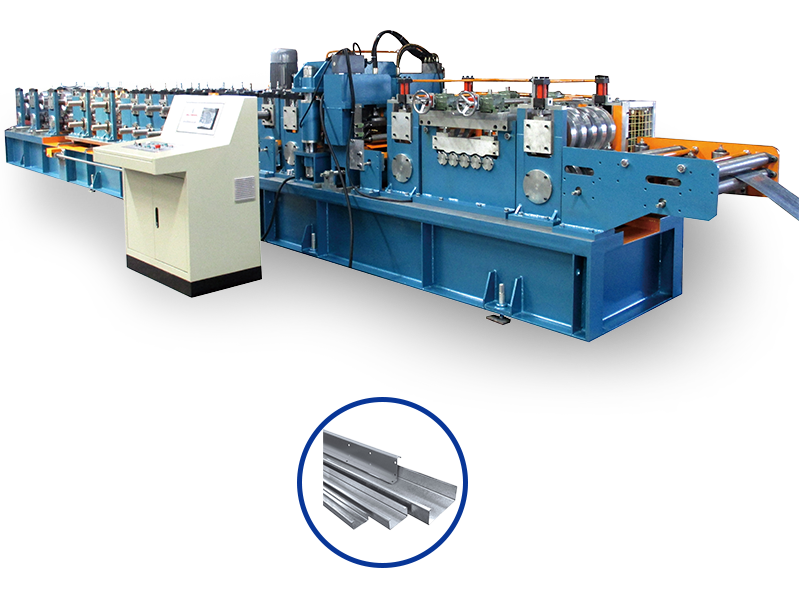
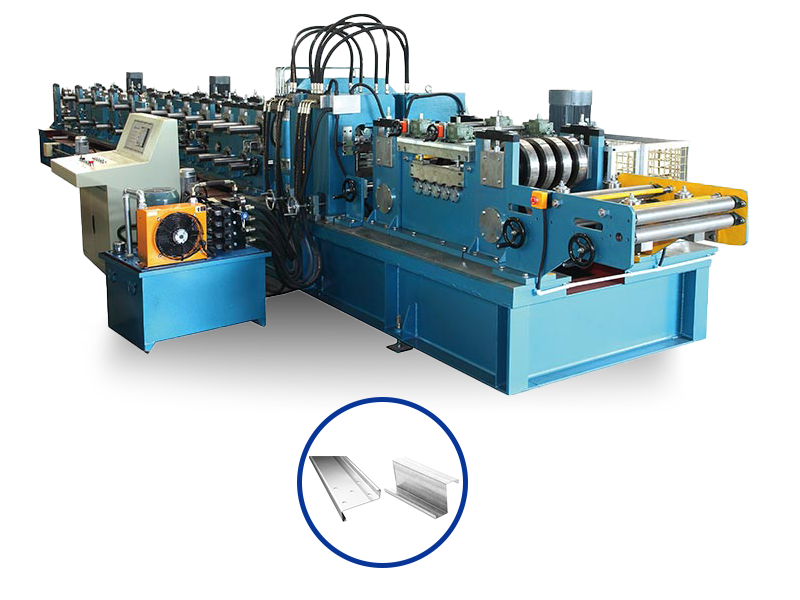
The first 3 processes are usually completed with a purlin roll forming machine. Watch he video below, you’ll then get a better understanding of the manufacturing of “C” & “Z” shape metal profiles
Zyforming Steel Framing Machines
Why Roll Forming Machines Can Make Precision Profiles?
Roll forming machines can make precision profiles for several key reasons:
- Continuous Process: Roll forming is a continuous process where a long strip of metal is gradually shaped through successive pairs of rollers. Each roller set makes small, incremental changes to the metal, allowing for very precise and consistent shaping across the entire length.
- Controlled Deformation: The metal is shaped incrementally without sudden changes in pressure, reducing stress and distortion. This controlled deformation ensures tight tolerances and precision in the final profile.
- Customizable Rollers: Roll forming machines use rollers that are custom-designed for specific profiles. This allows the creation of highly accurate shapes tailored to particular requirements, whether simple or complex.
- Material Handling: Roll forming machines handle materials in a way that reduces waste and ensures dimensional accuracy. With precise feeding mechanisms and adjustments, they maintain the profile’s consistency throughout production.
- Automation: Modern roll forming machines often integrate advanced automation and control systems, such as computer numerical control (CNC), that regulate speed, force, and alignment. This results in high precision and repeatability in every production run.
- High Efficiency and Scalability: The continuous nature of roll forming makes it ideal for producing large quantities of profiles with consistent accuracy, reducing variation that could otherwise arise in batch processing methods.
If you are looking for a high quality and high precision Steel Framing Machine & CZ Purlin Roll Forming Machine, contact us now! Zyforming has over 20 years of experience in manufacturing roll forming machines. We are confident in providing high-quality purlin roll-forming machine that best suit your needs.